PPF vs. Ceramic Coating: Key Differences and When Each One Wins
By the Texas Shine Doctor Team | Last Updated: November 2026
Paint protection film (PPF) is the choice for rock chips and scratches; a ceramic coating is the choice for gloss, UV resistance, and easier washing. Each one is set side by side below, then when each one wins, then the cost in Cypress, TX.
Key Takeaways
- Paint protection film is a thermoplastic urethane (TPU) layer, usually 6 to 10 mils thick, that absorbs rock chips and road debris.
- Ceramic coating is a liquid SiO2 polymer that cures to a layer only 1 to 2 microns thick and offers no meaningful rock chip protection.
- Professionally installed PPF typically lasts 5 to 10 years, while professional ceramic coatings typically last 2 to 7 years depending on product and care.
- PPF protects against impacts, while ceramic coating protects against contaminants, oxidation, and UV fading.
- Many owners apply PPF to high-impact panels first, then ceramic coat the full exterior, including the film.
PPF vs. Ceramic Coating: Side by Side
The difference between PPF and a ceramic coating is the type of damage each one stops: PPF protects against what hits the car, while ceramic coating protects against what sits on the car. That difference is set out in the table below.
| Feature | PPF | Ceramic Coating |
|---|---|---|
| Material | Thermoplastic urethane film | Liquid polymer, SiO2-based |
| Primary protection | Rock chips, scratches, road debris | Chemicals, UV rays, contaminants |
| Thickness | 6 to 10 mils | 1 to 2 microns |
| Self-healing | Yes, on most films | No |
| Hydrophobic effect | Good | Excellent |
| Rock chip protection | Strong | No meaningful impact protection |
| Durability | 5 to 10 years | 2 to 7 years |
| Best for | Physical paint protection | Gloss and easier maintenance |
What Is Paint Protection Film (PPF)?
Paint protection film is a clear thermoplastic urethane film, usually 6 to 10 mils thick, that creates a physical barrier against rock chips, scratches, and road debris. That barrier works as sacrificial protection: the film absorbs impacts before they reach the clear coat, so the factory finish stays intact longer.
Self-healing
Most modern PPF has an elastomeric top coat that self-heals light scratches and swirl marks when heat activates it.
- What activates it: Heat from direct sun, warm water, or a heat gun lets the top coat reflow.
- What it fixes: Light wash marring, fine scratches, and swirl marks on hoods, bumpers, and mirrors.
- What it does not fix: Deep cuts, punctures, or torn edges, which require replacing the film on that panel.
Many modern films also carry a hydrophobic top coat and UV inhibitors that slow yellowing of the film and fading of the paint underneath.
Finishes
PPF comes in three finishes that either preserve or change the vehicle's look:
- Gloss: Keeps the factory appearance.
- Matte: Gives gloss paint a flat look and is the standard choice for protecting factory matte paint, which is not polishable if damaged.
- Satin: Adds a soft, low-sheen finish without repainting.
Coverage
PPF is usually installed on the front bumper, hood, fenders, side mirrors, rocker panels, and door edges- the zones that take the first hit from road debris, parking-lot scuffs, and tire kickback. Common coverage levels include:
- Partial front: Front bumper and side mirrors.
- Full front: Full bumper, hood, fenders, and mirrors.
- Full body: Every painted panel on the vehicle.
Professional installation determines how clean the edges look and how well the film performs. A professional install requires thorough decontamination, paint correction where needed, wrapped edges, and a dust-controlled bay. Ceramic coating works on a different layer of the problem.
What Is Ceramic Coating?
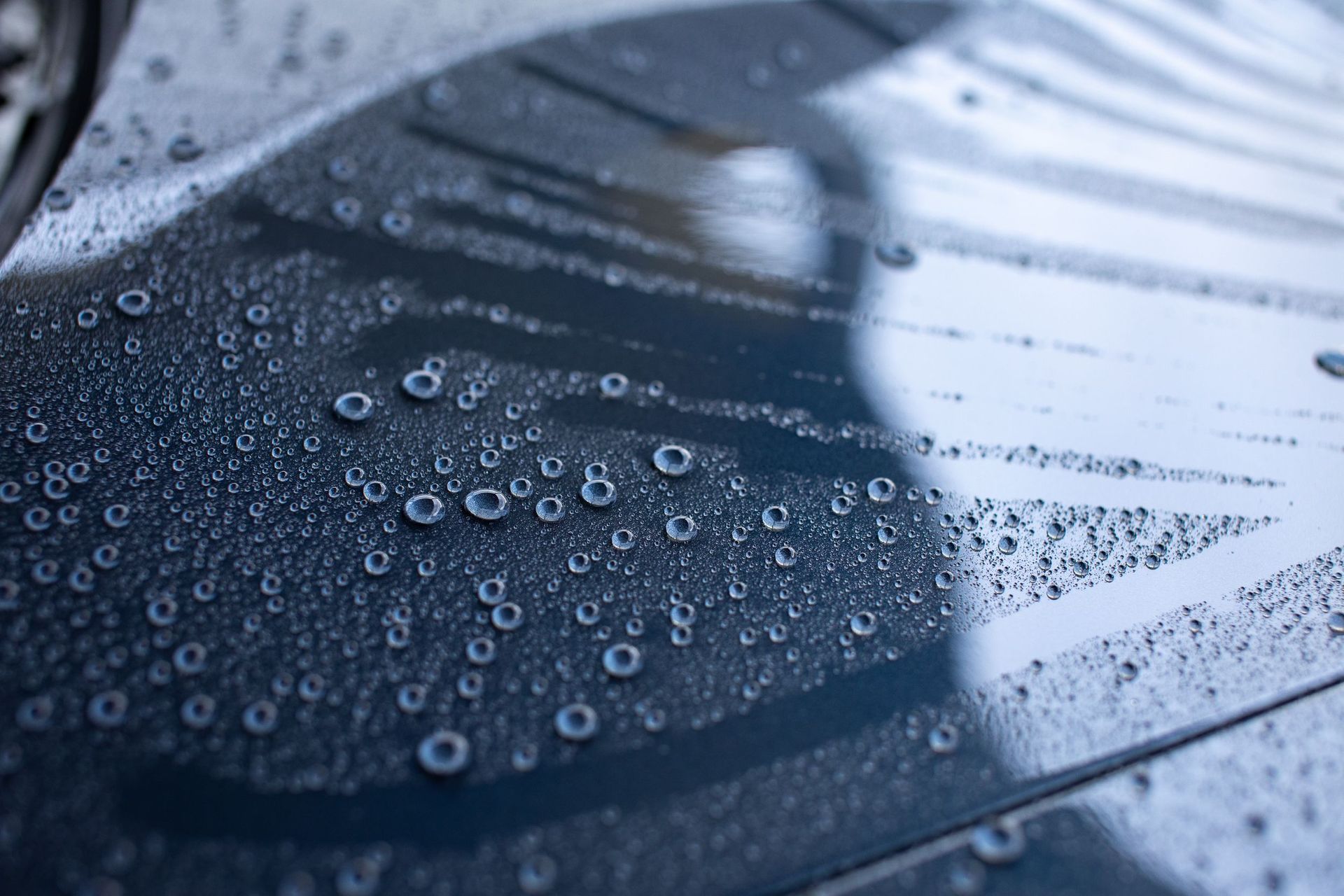
Ceramic coating is a liquid polymer, typically based on silicon dioxide (SiO2), that bonds to vehicle paint and cures into a protective layer only 1 to 2 microns thick. That layer does not act as armor against impacts. Its main job is chemical and environmental protection, along with deeper gloss and easier upkeep on paint, trim, glass, and wheels. Paint is usually decontaminated and polished before application, because the coating locks in whatever sits underneath.
Hydrophobic effect
Ceramic coatings are strongly hydrophobic, so water beads and sheets off the surface easily.
- Dirt and grime slide away instead of bonding to the finish.
- Wash time drops because the surface releases contamination with less scrubbing.
- Less scrubbing lowers the risk of dragging grit across the paint and creating swirl marks.
- A coated car still needs regular washing, but each wash takes less effort.
Chemical and UV resistance
Ceramic coating adds a chemical buffer between the clear coat and the environment, which helps the finish keep its clarity longer. It resists:
- Bird droppings and bug splatter.
- Tree sap and road tar.
- UV rays that cause oxidation and fading.
The coating does not make paint invincible, but it gives contaminants less chance to bond to the clear coat.
Those differences decide when each product wins.
When Does PPF Win, and When Does a Ceramic Coating Win?
PPF wins when the car faces impact risk; a ceramic coating wins when the owner wants gloss, easier cleaning, and chemical resistance.
PPF wins for:
- Highway commuters and highway-driven trucks: debris on US-290 and the Grand Parkway strikes the front end at speed.
- New vehicles, luxury cars, performance vehicles, and sports cars: these face more impact risk on the factory paint.
- Owners focused on resale: buyers notice cleaner front ends with fewer chips.
A ceramic coating wins for:
- Daily drivers whose owners want a deep shine and a slicker wash process with less effort.
- Vehicles parked outdoors for long hours: the coating helps reduce oxidation and fading in the Texas sun.
Combining PPF and Ceramic Coating
Applying PPF first, then ceramic coating over it, combines impact resistance with easier maintenance and better gloss. That order matters because PPF must bond directly to prepared paint. Ceramic coating then goes over the film, the uncovered paint, wheels, and glass to improve water behavior and cleaning. A common layout puts PPF on the front bumper, hood, and mirrors, then coats the rest of the exterior. For more on coating durability, read how long ceramic coating lasts.
Expert Insight:
"Many owners assume ceramic coating will stop rock chips. It won’t. For cars commuting on US-290 or I-10, Texas Shine Doctor pairs Autobahn™ PPF on the front end to take the chips with Autobahn™ Keramik on top for easy washing, backed by 10-year and 6-year warranties." - Texas Shine Doctor Team
The budget decides how much of that plan to install.
What Do PPF and Ceramic Coating Cost in Cypress, TX?
PPF costs about $600 for partial front coverage to $5,000 or more for full-body film; a professional ceramic coating costs $500 to $2,500. Those prices are typical industry ranges, not a quote: Texas Shine Doctor gives a written estimate after reviewing the paint.
| Service | Typical Industry Range |
|---|---|
| Ceramic coating (professional) | $500 to $2,500 |
| PPF partial front | $600 to $1,200 |
| PPF full front | $1,500 to $3,000 |
| PPF full body | $5,000 to $10,000+ |
Prices across the Houston area vary with vehicle size, paint condition, film or coating grade, and how much prep the paint needs. Repainting a single chipped panel costs several hundred dollars, which is why many owners treat front-end protection as cheaper insurance.
Related Services: Paint Protection Film and Ceramic Coating in Cypress, TX
Texas Shine Doctor installs paint protection film and applies ceramic coating in its Cypress shop for drivers across the Houston area. Learn more about Paint Protection Film in Cypress, TX, or Ceramic Coating in Cypress, TX.
Frequently Asked Questions
Does PPF protect better than ceramic coating against rock chips?
PPF protects far better against rock chips because its thick urethane barrier absorbs impact energy. Ceramic coating is a thin layer that does not stop a stone at highway speed, and its scratch resistance is limited to light swirl marks and surface marring. PPF is the stronger choice for front bumpers, hoods, mirrors, and other impact zones.
How long does PPF last compared with ceramic coating?
Quality PPF typically lasts 5 to 10 years, while professional ceramic coatings usually last 2 to 7 years. PPF is built to endure abrasion and debris strikes, while ceramic coating wears down gradually through washing, weathering, and chemical exposure. Constant outdoor parking, harsh chemicals, and brush-style automatic car washes shorten the life of both products.
Do PPF and ceramic coating both need maintenance?
PPF and ceramic coating both need regular washing with pH-neutral, non-abrasive cleaners. PPF needs occasional panel replacement in high-impact areas, while ceramic coating benefits from periodic SiO2 top-ups to keep water beading strong. Neither product stays at peak performance without routine care.
Is PPF just a clear bra?
PPF is the modern version of what was once called a clear bra. Today's thermoplastic urethane films add self-healing top coats, better optical clarity, and gloss, matte, and satin finishes that older films lacked. Many shops still use both terms for the same product.
About Texas Shine Doctor
Texas Shine Doctor is a 5-star-rated, in-shop auto detailing and paint protection business in Cypress, TX, serving Houston, Katy, Tomball, Hockley, and Memorial. Services include ceramic coating and wheel coating, paint protection film (PPF), paint correction, window tint, new car paint protection, auto detailing, and boat ceramic coating. The shop is an authorized Autobahn™ PPF installer, Autobahn™ ceramic installer, and certified Autobahn™ window film installer, and it provides transparent pricing with written estimates.