How Much Does It Cost To Wrap A Car? 2026 Price Guide
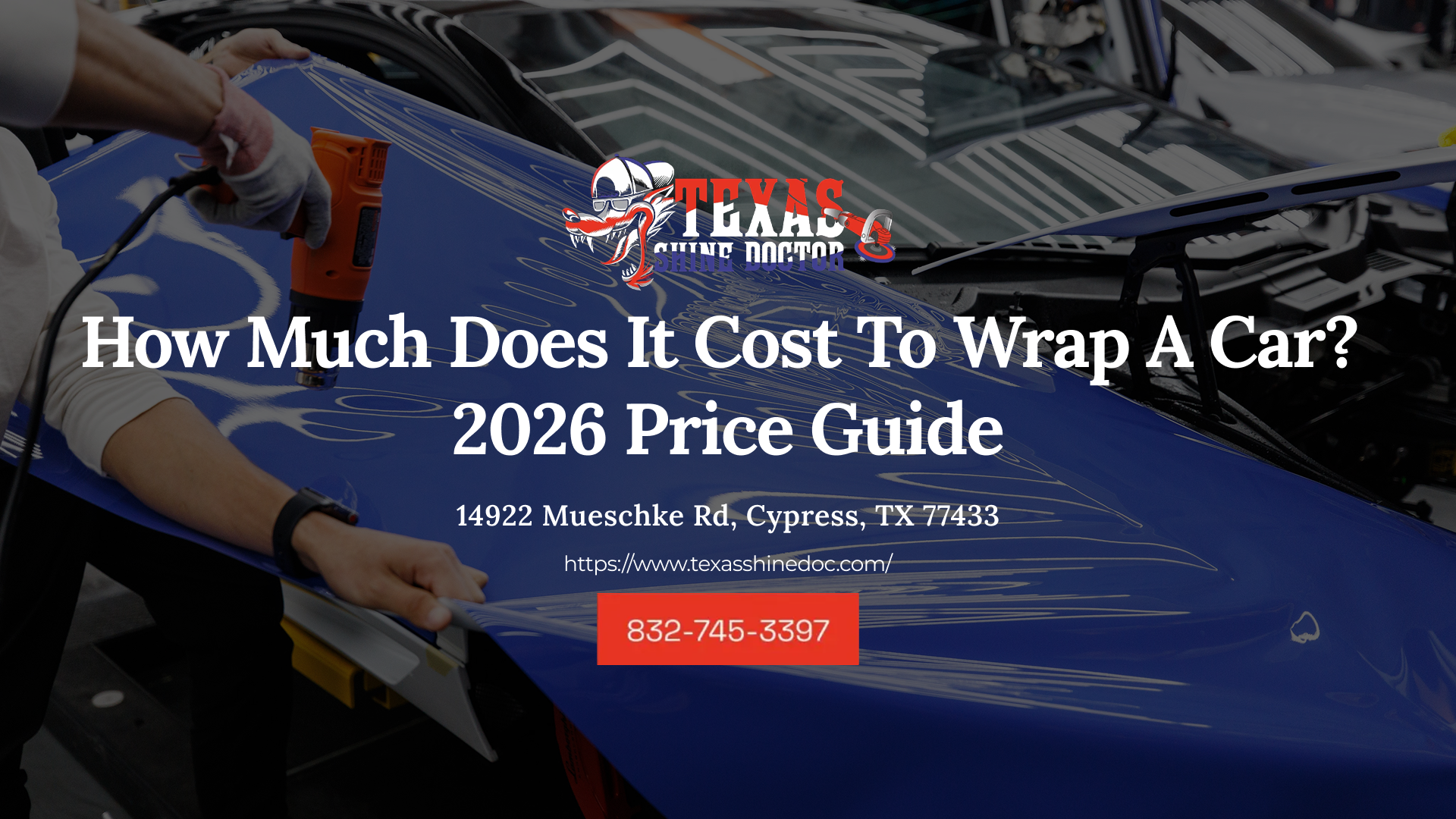
How much does it cost to wrap a car? A professional full vehicle wrap typically costs $2,500 to $6,000, while partial wraps range from about $500 to $2,500. This guide from Texas Shine Doctor breaks down typical car wrap costs, the factors that influence pricing, and what to consider before choosing a wrap for your vehicle.
Key Takeaways
- A professional full car wrap typically costs $2,500 to $6,000, with many projects falling around $3,000 to $5,000.
- Partial vehicle wraps generally cost $500 to $2,500, depending on coverage and installation complexity.
- Large SUVs, trucks, luxury vehicles, and specialty wrap projects can reach $7,000 or more.
- Professional car wrap installation commonly takes 3 to 7 business days, depending on preparation, coverage, and design complexity.
- Quality automotive vinyl wraps commonly last about 5 to 7 years when properly installed and maintained
How Much Does It Cost To Wrap A Car?
Professional car wrapping generally costs $2,500 to $6,000, while many full-wrap projects fall around $3,000 to $5,000.
Car wrap pricing depends on the installation, not just the amount of vinyl purchased. Vehicle size, exterior surface area, panel shape, film selection, preparation, disassembly, graphics, and professional labor can all influence the final quote. Typical market pricing includes:
| Wrap Project | Typical Cost Range |
|---|---|
| Partial vehicle wrap | $500 to $2,500 |
| Full vehicle wrap | $2,500 to $7,000 |
| Compact car | $1,500 to $3,500 |
| Sedan | $2,000 to $4,500 |
| SUV | $3,200 to $7,000 |
| Pickup truck | $2,800 to $6,500 |
| Luxury vehicle | $3,800 to $10,000 |
These figures are useful for budgeting but should not be treated as fixed quotes. A compact vehicle with relatively simple body panels typically requires less material and installation time than a large SUV. Luxury and performance vehicles may also require additional labor because of complex bumpers, vents, spoilers, trim, and body lines.
The vehicle's existing condition matters as well. An SUV with an old wrap, contaminated surfaces, or extensive trim removal may require much more prep than a sedan with clean factory paint, even when both projects use a similar type of vinyl.
Full Vs. Partial Car Wrap Costs
A full car wrap typically costs $2,500 to $7,000, while partial wraps generally cost $500 to $2,500 because they cover fewer exterior surfaces.
A full wrap covers most or all visible painted exterior panels and is commonly used for a complete color change, specialty finish, or large-scale graphic design.
A partial wrap focuses on selected sections of the vehicle. Common applications include hoods, roofs, mirrors, accent panels, stripes, chrome trim, and commercial graphics.
| Coverage | Typical Cost | Common Purpose |
|---|---|---|
| Full wrap | $2,500 to $7,000 | Complete color or design change |
| Partial wrap | $500 to $2,500 | Selected panels or graphics |
| Hood wrap | $200 to $600 | Hood color or finish change |
| Roof wrap | $250 to $700 | Contrasting roof finish |
| Chrome delete | $400 to $800 | Cover exterior chrome trim |
Partial wrapping can make sense when the desired change is limited to specific areas. A vehicle needing only a black roof and chrome delete, for example, does not require the material and labor involved in covering every exterior panel.
The cost difference is therefore primarily about coverage and installation scope, not whether one option is inherently better than the other.
What Factors Affect Car Wrap Pricing?
Car wrap pricing is shaped by several intersecting variables: vehicle size, body panel complexity, vinyl film type, surface preparation requirements, and professional installation labor. No two projects carry the same combination of these factors, which is why a quote based on the actual vehicle is more accurate than any general estimate.
Vehicle Size And Surface Area
Larger vehicles require more vinyl and more installation time. A three-row SUV generally requires more material than a compact sedan, while a pickup truck introduces additional variables such as cab configuration, bed length, fender flares, and aftermarket accessories.
Body Complexity
Vehicle shape can matter almost as much as overall size. Deep curves, recessed areas, vents, mirrors, spoilers, bumpers, sharp body lines, and complex trim require more detailed installation than large flat panels.
Complex surfaces also require careful film positioning and stretching to reduce the risk of lifting, wrinkles, or distortion.
Vinyl Type And Finish
Vinyl selection affects both material cost and installation requirements. Common finishes include:
- Gloss
- Matte
- Satin
- Metallic
- Color-shift
- Textured vinyl
- Chrome
- Custom printed graphics
Standard finishes generally sit toward the lower end of wrap pricing, while specialty films and custom designs can cost considerably more. Typical market ranges include:
| Vinyl Finish | Typical Cost Range |
|---|---|
| Gloss | $1,500 to $3,000 |
| Matte | $2,000 to $4,000 |
| Color-shift | $3,000 to $10,000 |
| Chrome | $5,000 to $10,000 |
These ranges are general estimates. Actual pricing still depends on vehicle size, coverage, preparation, and installation complexity. Film quality alone does not determine the finished result. Surface preparation, installation technique, edge finishing, vehicle condition, and maintenance also affect durability.
Surface Preparation
Vinyl requires a clean and suitable surface for reliable adhesion. Preparation may include:
- Deep cleaning
- Removal of wax and surface contaminants
- Decontamination
- Adhesive removal
- Inspection of existing paint
- Correction of suitable surface imperfections
Vinyl does not repair peeling paint, rust, dents, or failing clear coat. Those conditions should be evaluated before installation rather than hidden beneath film.
Disassembly
Some wrap projects require removal of door handles, mirrors, badges, lights, trim pieces, spoilers, or other components. Disassembly can help installers reach edges and create more complete coverage, but it also increases labor before and after the film installation.
Design Complexity
A standard solid-color wrap requires less design work than a custom commercial or decorative wrap. Custom projects can involve graphic design, revisions, proofing, printing, panel alignment, and precise positioning across the vehicle.
Professional Labor
Professional wrap labor includes more than applying vinyl to a panel. The process can involve layout planning, controlled stretching, trimming, edge finishing, recess work, reassembly, and final inspection. Labor requirements therefore vary significantly between vehicles and wrap designs.
What Additional Costs Should You Consider?
A car wrap budget may include design, surface preparation, existing-wrap removal, or optional ceramic coating in addition to the base installation price.
| Additional Service | Typical Cost Range |
|---|---|
| Custom design work | $200 to $1,000 |
| Surface preparation/paint correction | $100 to $500 |
| Existing wrap removal | $200 to $1,000 |
| Ceramic coating over wrap | $500 to $1,500 |
Existing Wrap Removal
An existing wrap normally needs to be removed before replacement vinyl is installed. Removal cost depends on the film's age, condition, adhesive behavior, UV exposure, and how easily it releases from the surface. Older film that has become brittle can require considerably more labor than a newer wrap that removes cleanly.
Surface Preparation
Surface preparation supports proper vinyl adhesion and a cleaner finished appearance. Paint correction may be appropriate for some surface defects, but wrapping should not be treated as a substitute for repairing rust, peeling clear coat, unstable paint, or significant body damage.
Ceramic Coating Over Vinyl
A compatible ceramic coating can be applied over some vinyl wraps to create a more hydrophobic surface and make routine cleaning easier.
Ceramic coating is an optional additional service rather than a requirement for the vinyl itself. Compatibility should be confirmed for the specific wrap film being installed.
How Long Does It Take To Wrap A Car?
Professional car wrap installation typically takes 3 to 7 business days, depending on vehicle size, preparation, coverage, design complexity, and required disassembly. A professional installation can involve several stages:
- Vehicle and paint inspection
- Washing and decontamination
- Surface preparation
- Removal of required trim or components
- Film layout and panel installation
- Edge and recess finishing
- Vehicle reassembly
- Final inspection
A partial hood or roof wrap naturally requires less installation time than a complete SUV color change. Custom graphics may also require design, proofing, and print production before physical installation begins, so the total project timeline can extend beyond the time the vehicle spends in the installation bay.
How Long Does A Car Wrap Last?
A quality automotive vinyl wrap commonly lasts about 5 to 7 years when properly installed and maintained. Actual wrap lifespan depends on the film, installation quality, vehicle use, storage conditions, UV exposure, climate, and maintenance.
Vehicles that spend substantial time outdoors in Texas can experience greater sun and heat exposure than garage-kept vehicles. Horizontal surfaces such as the hood, roof, and trunk also receive more direct sunlight than many vertical panels.
Manufacturer and installer warranties vary separately from expected wrap lifespan. Warranty periods can range from approximately 1 to 7 years, depending on the film, installation, and specific warranty terms.
Coverage may include certain issues such as peeling, fading, bubbling, or installation defects. The exact warranty should therefore be checked before choosing a wrap rather than assuming every product carries the same coverage.
How Should A Vinyl Wrap Be Maintained?
A vinyl wrap requires regular, gentle cleaning to maintain its appearance and reduce contamination that can shorten its usable life. Common care practices include:
- Hand washing with a suitable automotive shampoo
- Using a pH-neutral cleaner
- Removing bird droppings, insects, tree sap, and other contaminants promptly
- Avoiding abrasive polishes unless approved for the specific film
- Taking extra care around exposed film edges
- Following the vinyl manufacturer's maintenance instructions
Professional wrap maintenance typically costs $100 to $300 per year, although actual spending varies according to the vehicle and maintenance routine.
Automatic car washes also differ considerably in equipment and aggressiveness. Film-specific care instructions should therefore take priority over a blanket maintenance rule.
Car Wrap Vs. Paint: Which Costs Less?
A vehicle wrap can cost less than a high-quality repaint, but the actual difference depends on the quality and scope of both projects.
Paint pricing varies significantly according to vehicle condition, body repair, preparation, disassembly, paint system, finish quality, and labor. For that reason, there is no single percentage difference that applies to every wrap and paint job.
| Factor | Vehicle Wrap | Repaint |
|---|---|---|
| Typical full-job pricing | $2,5000 - $7,000 | Highly variable |
| Main purpose | Reversible color or design change | Permanent finish change or restoration |
| Reversible | Generally, over suitable paint | No |
| Original finish | Remains underneath | Refinished |
| Custom graphics | Well suited | Less practical |
| Damaged paint | Does not repair it | Can be addressed during refinishing |
| Typical service life | About 5–7 years | Potentially much longer |
A wrap is generally more relevant when the existing paint is suitable, and the goal is a temporary or reversible appearance change. A repaint becomes more relevant when the existing finish requires permanent restoration or substantial body and paint repair.
Is Wrapping A Car Worth The Cost?
A car wrap can be worth the cost when the goal is reversible customization, a specialty finish, or custom graphics without permanently repainting the vehicle. Vinyl offers access to gloss, matte, satin, metallic, color-shift, chrome, textured, and printed finishes that can substantially change a vehicle's appearance.
Commercial wraps can also use vehicle surfaces for branded graphics and mobile advertising. Value depends on the vehicle's condition and the intended outcome. A wrap becomes less practical when significant paint or body repair is required before installation.
Ready to Find Out What a Wrap Would Cost for Your Vehicle?
Wrap pricing depends on your vehicle's size, body panel complexity, film selection, and condition, so a general estimate only gets you so far. The more useful step is a walk-around assessment based on the actual vehicle.
Texas Shine Doctor offers
professional vinyl wrap installation in Cypress, TX, for vehicle owners across Cypress, Katy, Tomball, and the greater Houston area. Bring your vehicle in, and the team will review your coverage options, walk you through available finishes, and provide a written estimate based on what your specific project actually involves before you commit to anything.
FAQs
How much does it cost to fully wrap a car?
A full professional car wrap generally costs $2,500 to $7,000, with many projects falling around $3,000 to $5,000. Vehicle size, body complexity, film type, preparation, disassembly, and installation labor determine the final price. Large SUVs, luxury vehicles, chrome films, and complex custom designs can reach the upper end or exceed the typical range.
Is $3,000 enough to wrap a car?
$3,000 can fall within the normal range for a professional vehicle wrap, particularly for a smaller vehicle or standard film. Compact cars typically fall in the $1,500 to $3,500 range, while sedans generally run $2,000 to $4,500. Specialty films, larger vehicles, custom graphics, surface preparation, and removal of an existing wrap can raise the project beyond a $3,000 budget.
How much does a partial car wrap cost?
A partial car wrap typically costs $500 to $2,500, depending on the number and complexity of panels covered. Individual projects may cost less: hood wraps run around $200 to $600, roof wraps around $250 to $700, and chrome deletes around $400 to $800. Custom printed graphics can add design and production costs.
How long does a car wrap last?
A quality automotive vinyl wrap commonly lasts approximately 5 to 7 years with suitable installation and maintenance. Film product, UV exposure, storage, driving conditions, cleaning methods, and horizontal-panel exposure can affect actual longevity. Warranty periods are separate from expected lifespan and may range from 1 to 7 years depending on the film and installer.
Does wrapping a car damage the paint?
A properly installed and removed wrap is intended for use over suitable automotive finishes, but paint condition matters. Peeling clear coat, weak aftermarket paint, rust, and previous repairs can increase removal risk. Surface inspection is therefore important before wrapping. Vinyl should not be treated as a repair method for damaged or unstable paint.
Is PPF better than a vinyl wrap?
PPF and vinyl wraps solve different primary problems. Paint protection film is designed around impact and paint protection, while vinyl wrapping is primarily used for color changes, finishes, graphics, and customization. Drivers focused on rock chips and road debris may prioritize PPF, while drivers focused on changing appearance may find vinyl more appropriate.
About Texas Shine Doctor
Texas Shine Doctor is a Cypress, TX-based auto detailing and vehicle protection shop serving the greater Houston area. As an Autobahn™ Certified Installer, the team specializes in PPF, ceramic coating, paint correction, window tinting, and auto detailing, backed by a 5-star rating on Google.
Update: August 2026